
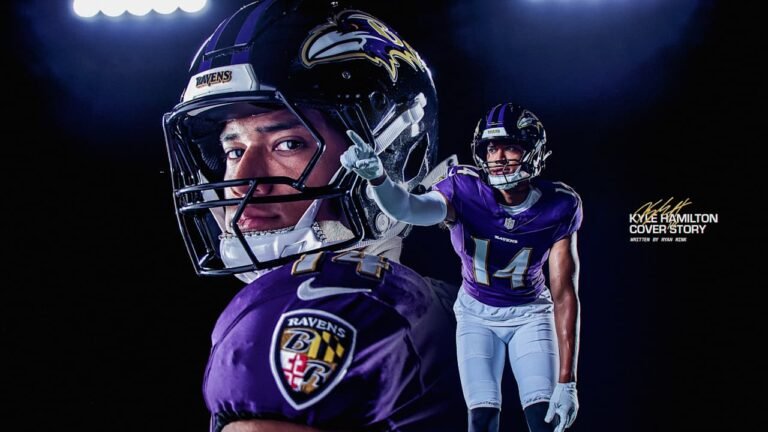
Hamilton’s football intellect is a result of his non-football intelligent. He is a Mensa member, and qualified to join the elite group in third grade when he scored an IQ of 132. He knows 38 digits in.
Hamilton minimized the mental challenge of his work. He manages all his responsibilities by categorizing them.
Hamilton explained that he does not let his job on any particular play dictate what he does. Hamilton said that a lot of the work is just about critical thinking, listening and consuming information.
Pagano sometimes wonders if Hamilton is taking notes in the meeting. Hamilton is a meticulous note-taker and, when Hamilton speaks, even a coach with 36 years of experience like Pagano can learn something.
“He will think of a movement, a change, or something in a call, and ask: ‘What if this happens?'” Pagano said. “The rest are like, “Man, I didn’t think of that.” I’m at the back, like ‘I didn’t think of it.’ It’s an excellent question. But that’s the way his mind works.”
Clark Lea, Hamilton’s defensive co-ordinator at Notre Dame, is now Vanderbilt’s head coach. He was the very first coach who envisioned Hamilton playing a dynamic position near the line-of-scrimmage. Alohi Gillman, a Ravens safety who was at Notre Dame when Hamilton assumed the role, had been in it before Hamilton. Gilman, who has experience in this field, said that Hamilton’s mental stress is far more advanced than what is seen in the NFL.
Gilman explained that it took a lot of study and playing the ball to achieve a high-level performance.
Once he grasps the concept of what is going on and what the offense wants to achieve, he plays to his strengths in that situation. He makes many plays as a result. It’s quite impressive.”